



Virtual instructor-led training (VILT) has crossed an important threshold.
What began as a necessary response to the COVID-19 pandemic disruption is now firmly embedded in how organizations build skills, develop leaders, and support learning at scale. Nearly every organization offers VILT today, and for many, it represents a significant share of overall training delivery. Over time, live virtual learning has moved from an alternative option to a core part of how training programs operate across industries and use cases.
The release of The State of Live Virtual Training in 2026: Overcoming Barriers to Training Success, produced in partnership with Training magazine, captures this evolution clearly. Based on responses from 545 organizations across a variety of industries, the research reflects a market that has embraced virtual instructor-led training and is now working through what it takes to deliver it consistently and effectively.
The data shows just how deeply VILT has taken hold. Ninety-eight percent of organizations report using virtual instructor-led training, and 40% rely on it for at least half of their training programs. Nearly half say VILT is fully embedded in their organization, and 68% report using it more today than before the pandemic. Most organizations also plan to maintain or increase their investment over the next two years.
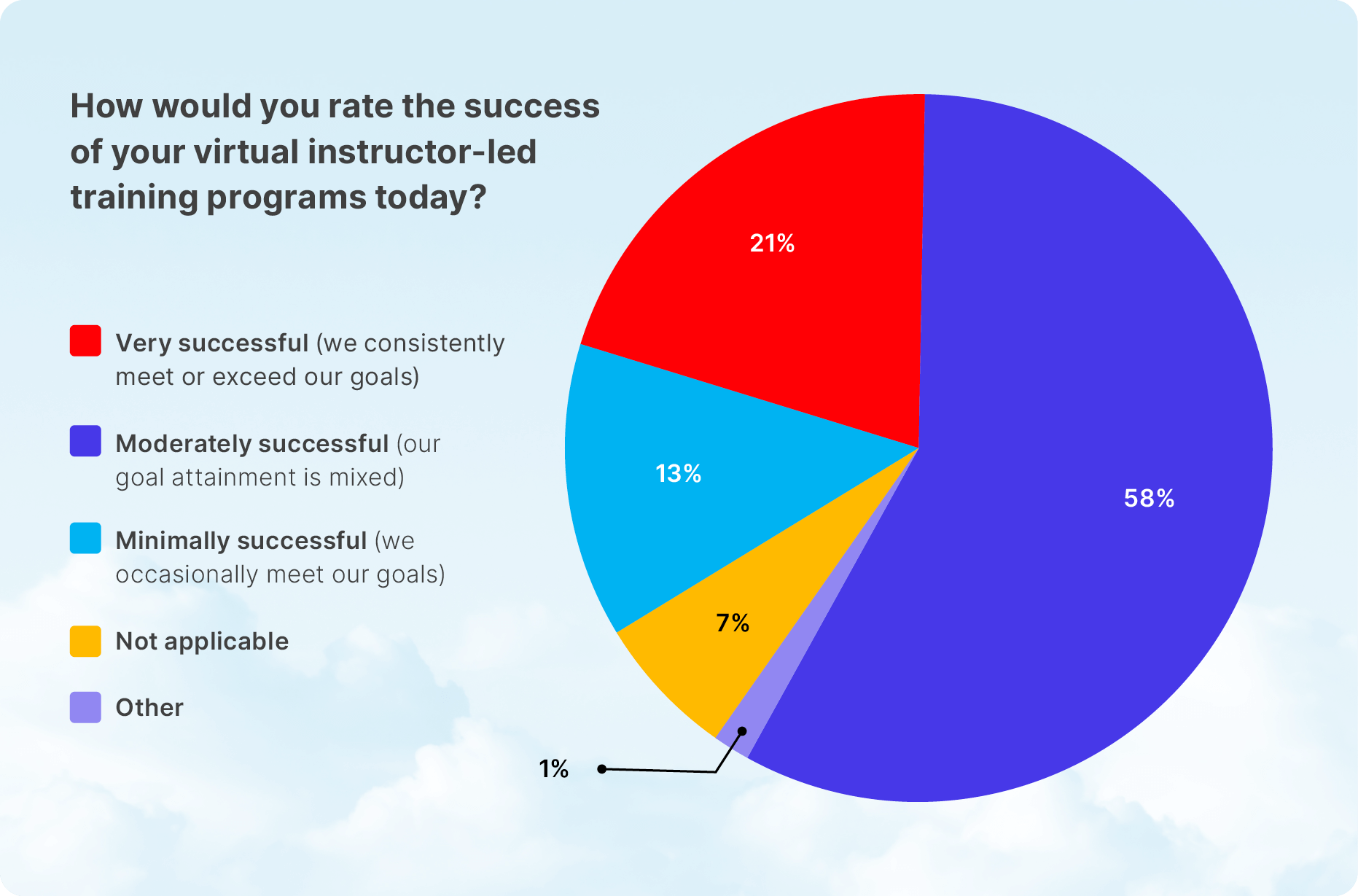
At the same time, the research points to meaningful opportunities. While 79% of organizations describe their VILT programs as at least moderately successful—evidence that live virtual training is delivering real value—only 21% say their efforts are reaching the highest level of success. For many learning teams, this reflects a shift in focus. With adoption firmly in place, attention is turning toward improving consistency, engagement, and impact by gaining clearer visibility into what happens before, during, and after live virtual sessions.
Across organizations, the same friction points surface repeatedly—before sessions begin, while learning is happening, and after sessions conclude.
Before a session ever goes live, learning teams encounter operational complexity that makes scaling difficult. Survey respondents point to challenges such as scheduling across time zones, managing registration and participant access, preparing and loading content, and coordinating instructor resources. These tasks require significant manual effort and often slow down delivery, particularly for high-volume or recurring programs.
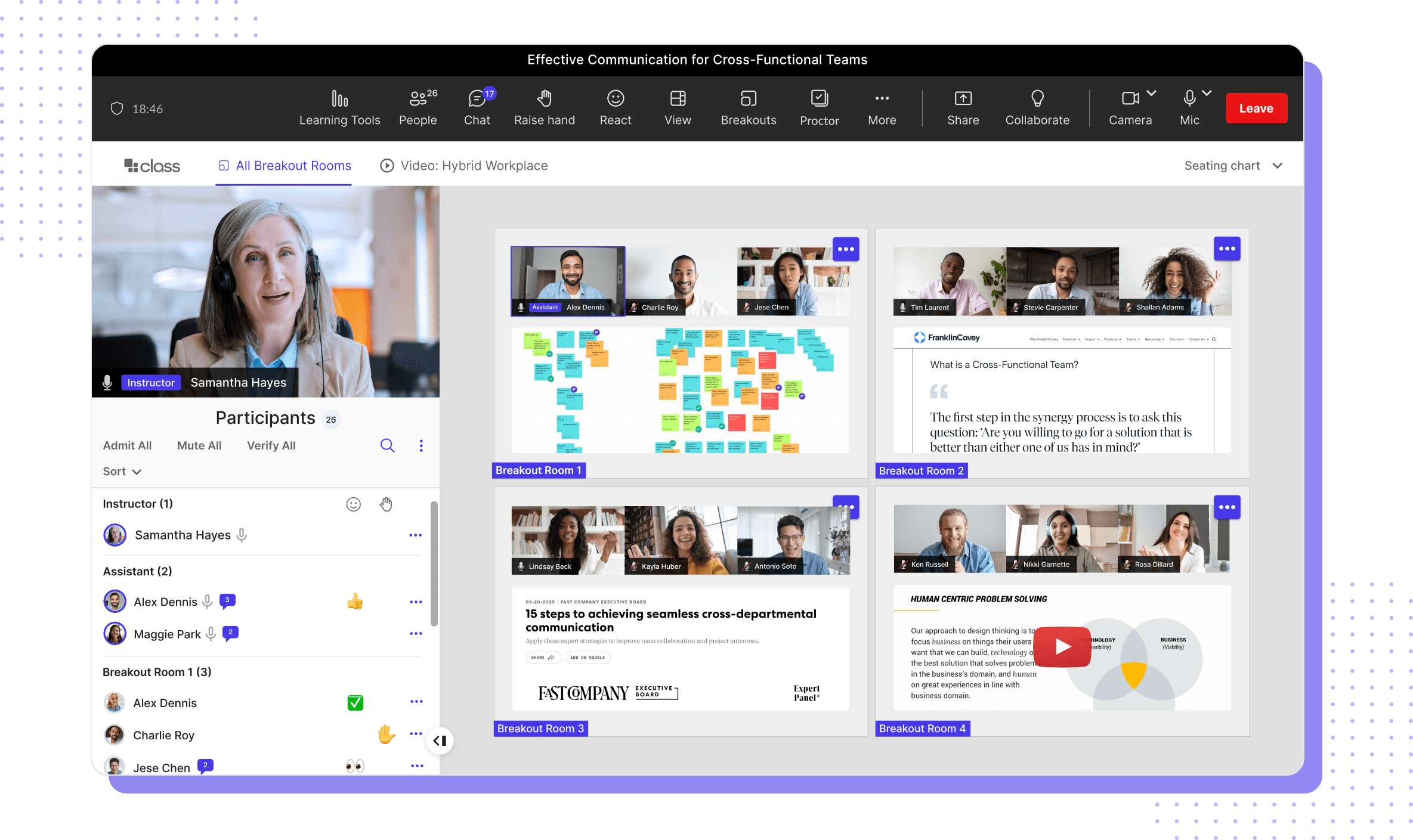
During live sessions, engagement becomes the most persistent challenge. Tracking learner participation in real time ranks as the most difficult aspect of delivery, followed closely by managing and monitoring breakout rooms. Once learners move into smaller groups, instructors often have limited insight into what is happening, even though these moments are central to discussion, collaboration, and applied learning.
After sessions end, the picture becomes more fragmented. Respondents cite difficulties exporting or integrating session data, analyzing engagement and learning outcomes, and using that information to improve future training. As a result, many organizations rely on surface-level metrics such as attendance, completion, or post-session surveys rather than deeper indicators tied to learning effectiveness or business goals.
Individually, these challenges are familiar and manageable. Taken together, they help explain why so many VILT programs deliver value while still leaving room to grow.
The research in The State of Live Virtual Training in 2026 reinforces a conclusion we’ve arrived at through years of working alongside learning teams: the next gains in virtual instructor-led training will come from strengthening the systems that support live learning, not from asking instructors or learners to do more.
At this stage of adoption, VILT succeeds or struggles based on continuity, awareness, and insight. Learning teams need environments that carry context forward across sessions. Instructors need to see how learners are engaging as learning unfolds. And organizations need ways to use what they observe to improve programs over time.
That perspective has shaped how Class approaches the virtual classroom. Live sessions are supported by persistent structures that reduce repetitive setup and help programs scale without losing consistency. Instructors have clearer visibility into engagement and collaboration, including the activity happening in breakout settings where learning often takes shape. And learning data is captured as part of the experience itself, making it easier to reflect, identify patterns, and refine programs over time.
For learning leaders, this matters because it expands what’s possible. When visibility is built into every stage of learning, teams spend less time working around limitations and more time focusing on instructional quality, development, and outcomes that matter to the organization. VILT becomes easier to manage, easier to improve, and easier to trust as a long-term strategy.
As organizations plan to maintain or increase their investment in VILT, expectations are changing. Learning leaders are being asked to deliver consistency at scale, support instructors and learners more effectively, and demonstrate impact with greater clarity. Meeting those expectations requires treating the virtual classroom as critical learning infrastructure, and not just a delivery channel.
Designing VILT with intention means aligning technology, workflows, and insight around how live learning actually happens. It means supporting instructors during the moments that matter most, giving learning teams clearer visibility into what is working, and creating feedback loops that make improvement part of the system rather than an afterthought.
The organizations that get this right will be better positioned to sustain live virtual training as their programs grow and evolve. They will be able to respond more quickly, support instructors more consistently, and make decisions grounded in what they can see rather than what they have to infer. That is where the opportunity now sits, and where the future of VILT is taking shape.
If you're ready to explore what stronger visibility could look like for your live virtual training programs, we'd love to show you what Class makes possible. Connect with our team today.