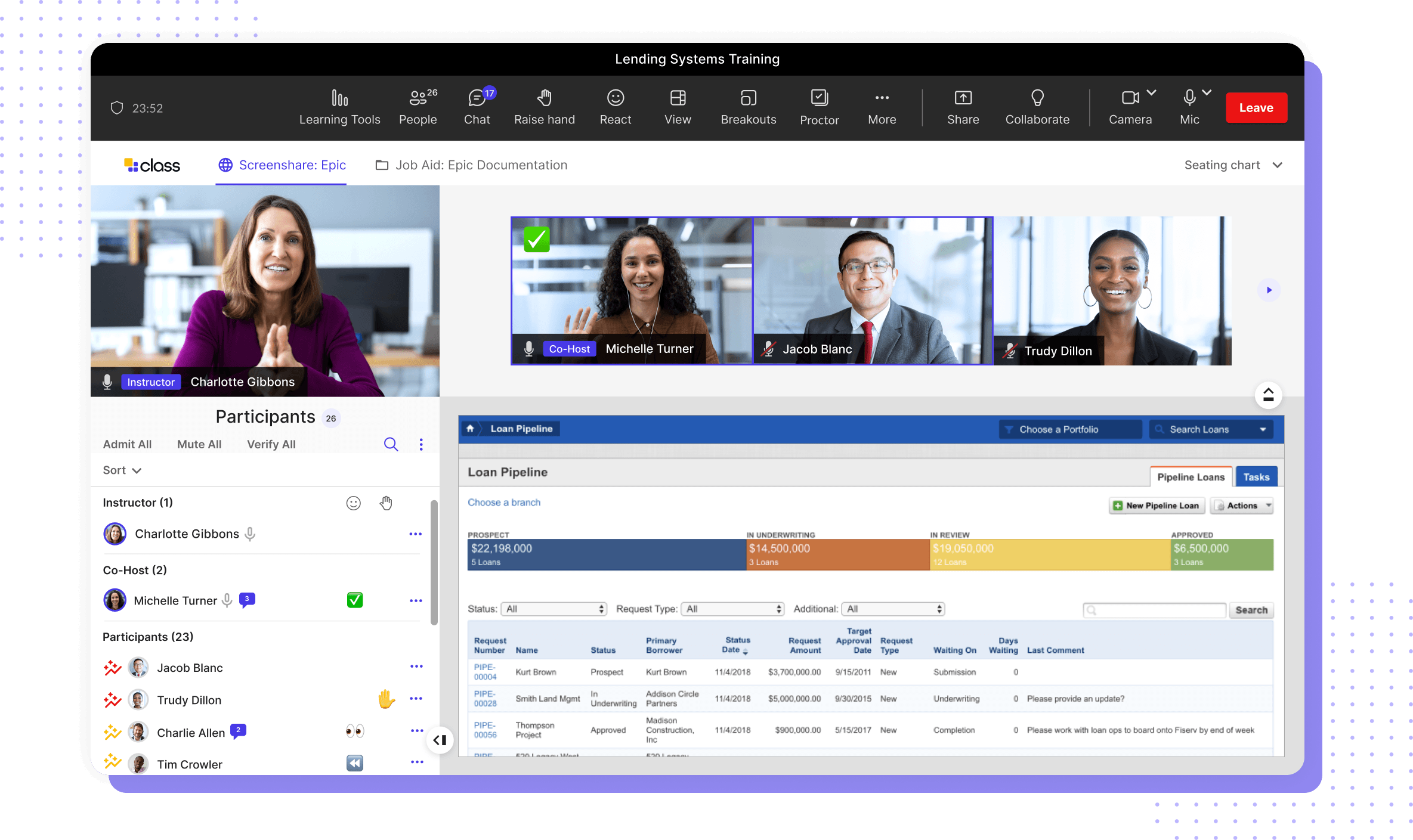
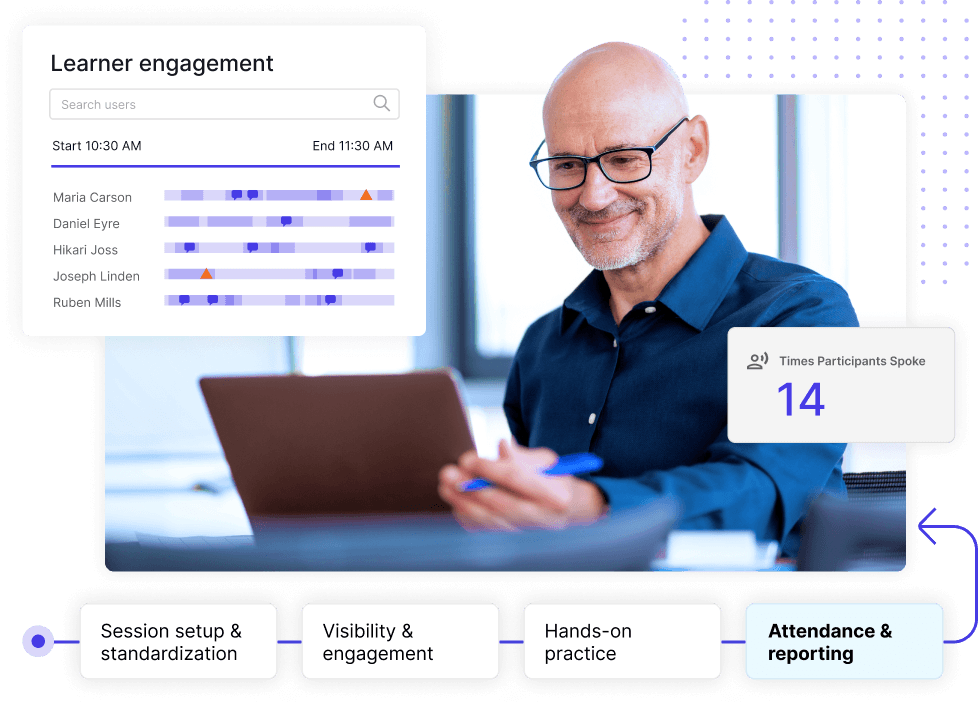
Travel costs and short-handed branches pushed training onto Zoom and Teams, the same tools used for every meeting. A meeting was never built to teach someone a workflow hands-on, show who’s engaged, or prove they learned it. Class, a purpose-built virtual classroom, provides the live learning layer that standard meeting tools are missing.
Why a video call isn't the same as a classroom
Staff pulled off the floor and onto a call built for meetings, not instruction
No way to practice a workflow hands-on, only watch it
No way to tell if a learner is engaged until it shows up in performance
Attendance logged, but nothing that shows what anyone actually learned
The same sessions rebuilt from scratch
Effective branch training doesn’t have to come with a travel bill attached
Multi-branch training you can standardize, deliver, and prove
Moving branch training to a video call can solve the travel problem, but it often leaves open the question of whether your staff walked away able to do the job. Class structures every session around hands-on practice and gives your team the visibility and records to show that it did.
Show up ready for every branch, every session
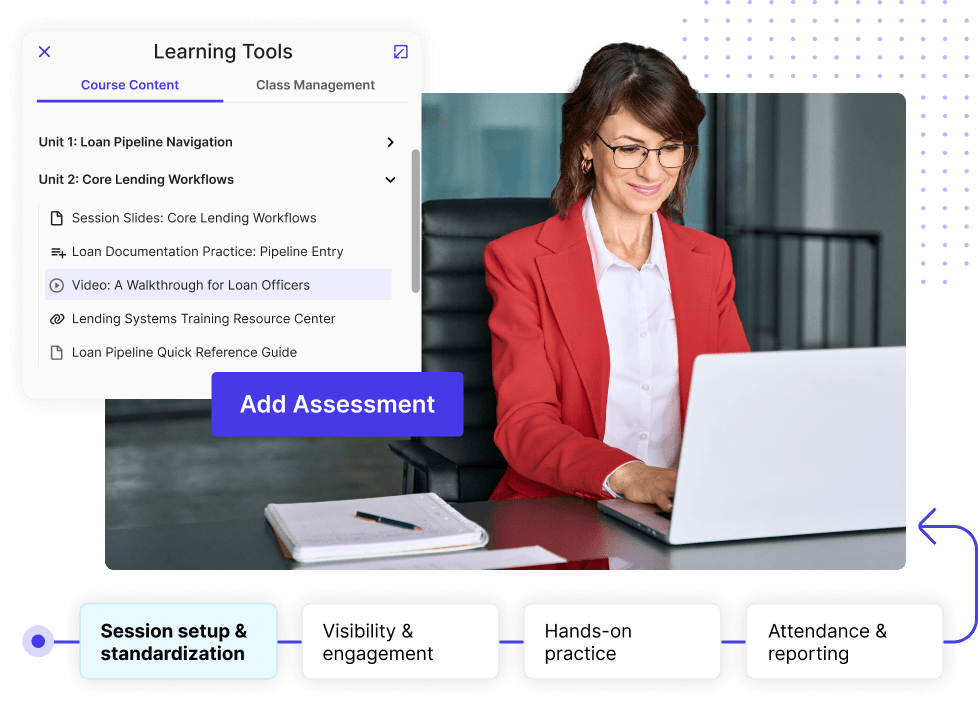
Before a session starts, someone still has to load rosters, pull materials, and set up system access for each branch involved. Class syncs with your systems so materials are loaded, rosters are current, and attendance is handled automatically.
Keep every learner engaged, and know when they're not
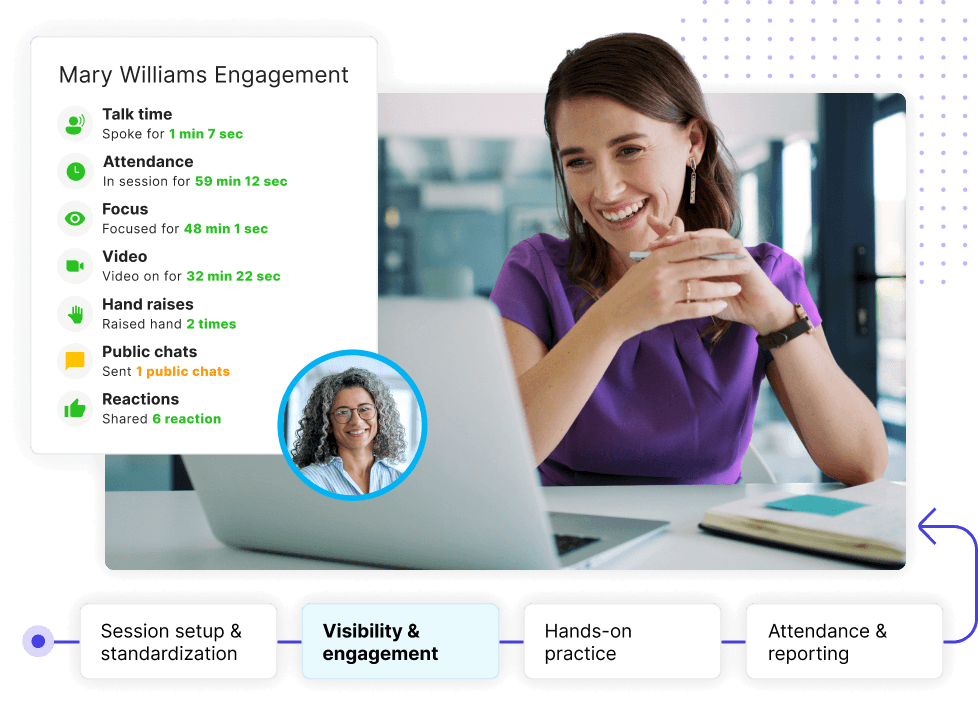
On a call pulling in four branches, a trainee can sit muted with the camera off for the entire session, and a trainer has no way to know until it shows up in their work. Class makes participation visible with real-time engagement scores and focus tracking, so a trainer knows who’s engaged and who isn’t.
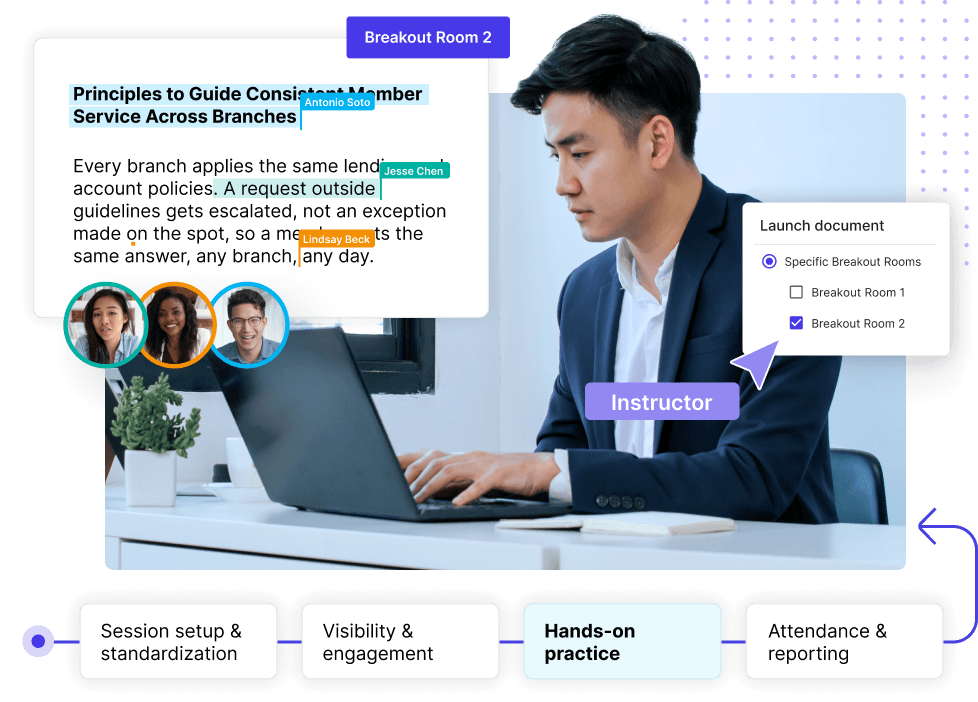
A screen share shows a trainee how a lending or deposit workflow works, but running it themselves is what actually builds the skill. In the main session, a trainer can proctor individual learners to see who’s following along. In breakout rooms, live transcripts and engagement scores let a trainer spot a group that’s stuck without sitting in on every conversation.
Track completion across every branch, without the follow-up
When completion tracking depends on branch managers reporting back one at a time, some branches stay unaccounted for until someone chases the numbers down. Class brings attendance and completion data into one dashboard, so a training team can see who’s trained and who still needs to be.
Class not only allows our trainers to be more effective at delivering the content, but it also holds our attendees accountable for actually participating. And that has been kind of a missing piece of our training."
Trusted by 10M+ users from 1,500+ institutions in 75+ countries
Connected to the ecosystem your team is already in
When rosters, attendance, and completion tracking live in separate systems, errors and lost progress follow. Class integrates with your LMS to keep all three in sync automatically, so every branch pulls from the same accurate record instead of its own version.
Featured LMS integrations for Financial Institutions
Built with the security a regulated institution requires
Class is SOC 2 Type II certified and StateRAMP authorized, so your training platform holds up to the same scrutiny as the rest of your technology stack. Administrators control who joins a session, what gets recorded, and who can access it afterward.
SOC 2 TYPE II
AUTHORIZED STATERAMP
DEDICATED SETUP
The cost of running branch training on tools that weren't designed for it
Our team works alongside yours through every phase of implementation, from initial configuration to your first live branch training session. Getting your program running on Class is a collaborative process, and we’re invested in your success from day one.
Kickoff
Together, we orient around your goals for multi-branch training delivery, key roles, and what to expect through each phase of implementation.
Technical Implementation
We configure your Class environment alongside your IT and training administrators, connecting your existing systems, setting up integrations, and confirming everything is in place before moving forward.
Administrator Training
We train your project lead and training team on Class, work through hands-on practice together, and make sure your team is fully prepared to manage branch training sessions independently before your program goes live.
Rollout
Together, we define your rollout approach across branches, complete instructor training, hold a launch readiness call, and support your team through the Class rollout.
Frequently asked questionsWant to know more?
Does Class connect to our core banking platform?
No. Class is the training delivery layer, not a connector to your core banking, lending, or deposit systems. Your team builds sessions and practice scenarios around any workflow those systems support, without Class requiring access to the systems themselves.
How does Class integrate with the LMS or HR systems we already use?
Class integrates natively with major LMS platforms. Rosters sync automatically before each session, attendance is recorded without manual input, and completion data passes back to your system when the session ends. For a platform not currently on our integration list, the Class team is happy to discuss and scope a custom integration.
How does Class support training documentation for compliance and audit purposes?
Class captures attendance, engagement scores, assessment outcomes, and session records for every training event, automatically, without post-session manual work. That data is exportable and timestamped, giving your team a complete record for board reporting, exam prep, and internal compliance review. You can show not just that training happened, but what it produced.
Can Class support training across multiple branches, regions, or states?
Yes! Training templates built in Class are reusable across every branch, department, and cohort, so a program developed for one location deploys consistently to others without additional setup. Role-based access and roster sync mean each session reaches the right staff, regardless of how many locations your institution operates.
How does Class reduce the administrative burden on training teams managing multiple branches?
The setup and reporting work that typically falls on training coordinators, building sessions, managing rosters, tracking attendance, exporting completion data, is largely automated in Class. Sessions are built from reusable templates. Attendance is captured automatically. Completion and engagement data flows to your system when the session ends. Your team spends less time on logistics and more time on the training itself.
The live virtual training environment your branch network deserves